
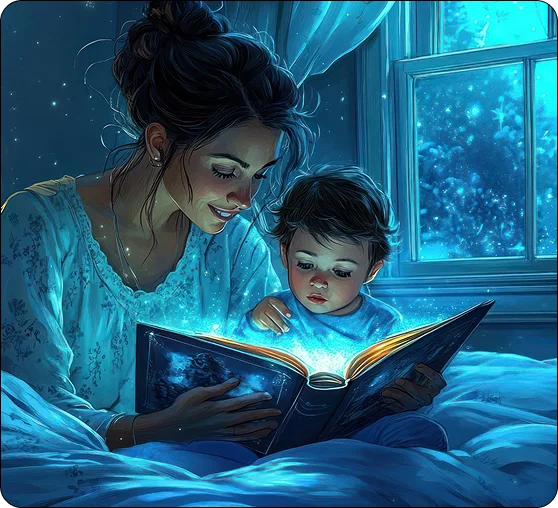
The Magic of Storytelling: Why Imagination Matters for Children
Storytelling has long been a cherished tradition, passed down through generations to entertain, educate, and inspire. But what makes stories so special, especially for children? Why do we place such importance on storytelling in childhood, and how does imagination play a role in their development?
Imagination is a powerful tool, and when combined with storytelling, it becomes a means for children to explore the world around them, make sense of their experiences, and understand their emotions. Stories have an unmatched ability to transport children to faraway lands, introduce them to captivating characters, and immerse them in adventures that both entertain and teach valuable life lessons. But more than that, stories unlock the creative potential within young minds and nurture a deeper connection to the world.
The Power of Imagination in Early Development
A child’s imagination is limitless. From the very first moments of life, children begin exploring the world through their senses and their imagination. The world of make-believe offers them an escape from reality, a place where anything is possible. Through stories, children can travel to different galaxies, talk to animals, and interact with magical creatures. They can explore worlds that are vastly different from their own, gaining experiences and insights along the way.
Imagination serves as a foundation for cognitive development in children. It helps them develop problem-solving skills, enhance their emotional intelligence, and think creatively. In an imaginative world, children encounter situations they may not face in their daily lives, such as dealing with a brave hero facing overwhelming odds or a mystical creature learning the value of friendship. These scenarios help children develop empathy, as they put themselves in the shoes of the characters and understand their emotions.
When children engage in imaginative play or read stories, they practice building narratives, which helps them strengthen their communication skills. They learn to make connections between ideas, organize their thoughts, and express their emotions. By imagining new scenarios and outcomes, they develop an understanding of cause and effect, which is an essential cognitive skill. Moreover, they build resilience as they encounter characters who persevere through challenges.
Stories as a Gateway to Emotional Growth
In a child’s world, stories are more than just entertaining distractions. They play a significant role in helping children understand their emotions, develop coping mechanisms, and relate to others. When children read about a character experiencing fear, joy, sadness, or frustration, they connect those emotions to their own lives. This connection is vital for emotional growth.
For example, in stories where characters face adversity or struggle to understand their own feelings, children can identify with the character’s challenges. They may see a reflection of themselves in the story and learn ways to navigate their own feelings in similar situations. Storytelling, in essence, acts as a tool for emotional literacy, helping children recognize and process their emotions in a healthy way.
Furthermore, stories teach children important values, such as kindness, honesty, perseverance, and empathy. As they listen to characters go on journeys of self-discovery and personal growth, children begin to internalize these lessons and apply them to their own lives. The process of following a character’s emotional arc, whether it’s overcoming fears, making friends, or learning the importance of being true to oneself, encourages children to reflect on their own behavior and relationships.
Imagination Sparks Creativity and Problem-Solving Skills
When children are immersed in the world of storytelling, they are not passive listeners. Instead, they actively engage with the narrative. Their imaginations run wild as they picture the scenes, envision the characters, and wonder what might happen next. This imaginative engagement is essential for developing creativity, a skill that will serve them well throughout their lives.
Creative thinking is all about making new connections and thinking outside the box. Through storytelling, children are encouraged to do just that. As they listen to stories, they are presented with problems or dilemmas that the characters must solve. This prompts children to think critically about the choices the characters make and consider how they might handle similar situations themselves. This process strengthens their problem-solving abilities and helps them think creatively about solutions.
The beauty of stories is that they often present open-ended situations, encouraging children to come up with their own endings or imagine what would happen next. This kind of imaginative thinking allows children to explore different possibilities and outcomes. It’s not about finding the “right” answer but about developing the ability to think flexibly and explore new ideas.
Fostering a Lifelong Love of Learning
One of the most enduring benefits of storytelling is its ability to foster a lifelong love of learning. When children are introduced to stories at a young age, they develop an appreciation for literature and a curiosity about the world. The more stories they hear, the more they want to learn about different places, cultures, and ideas.
Stories also inspire children to explore their own creativity. As children hear tales of adventurous heroes, clever animals, and magical lands, they are motivated to create their own stories. This imaginative creation process encourages children to experiment with words, drawings, and even performances, helping them develop an early love for the arts.
By presenting new ideas, cultures, and experiences through storytelling, children are encouraged to broaden their horizons and explore the world around them. They begin to ask questions that lead to further exploration, research, and discovery. The curiosity sparked by a good story is often the first step toward a lifetime of learning and personal growth.
Nurturing the Imagination of the Future
As we look to the future, it’s clear that imagination will play an essential role in preparing children for the challenges ahead. In a rapidly changing world, creativity and problem-solving are more important than ever. Through storytelling, children are not only learning about themselves and their emotions, but they are also being equipped with the skills they will need to navigate an increasingly complex world.
Whether it’s through reading stories, telling their own, or imagining new worlds, children are learning to think beyond the confines of the present and dream of possibilities that don’t yet exist. The power of imagination allows them to break free from the constraints of reality and envision a better, more innovative future.
In today’s world, where technology, environmental issues, and social challenges are ever-present, children’s ability to imagine new solutions and alternative futures will be crucial. The creative thinking fostered by storytelling is the foundation of innovation. By encouraging children to embrace their imagination and explore the limitless potential of storytelling, we are helping to build the next generation of thinkers, dreamers, and problem-solvers.
A World of Infinite Possibilities
At its core, storytelling is more than just a fun way to pass the time,it is a gateway to growth, learning, and imagination. Through stories, children not only escape into fantastical worlds, but they also learn important lessons about themselves, others, and the world around them. Imagination, fueled by storytelling, encourages emotional growth, creativity, and resilience, all of which are essential qualities for navigating life’s challenges.
As parents, educators, and storytellers, we have the power to nurture the imagination of children, helping them develop the skills they need to dream big, think creatively, and solve problems. Through storytelling, we open up a world of infinite possibilities, one where children are free to explore, create, and, most importantly, believe in the magic within themselves.
